
20/8/2026
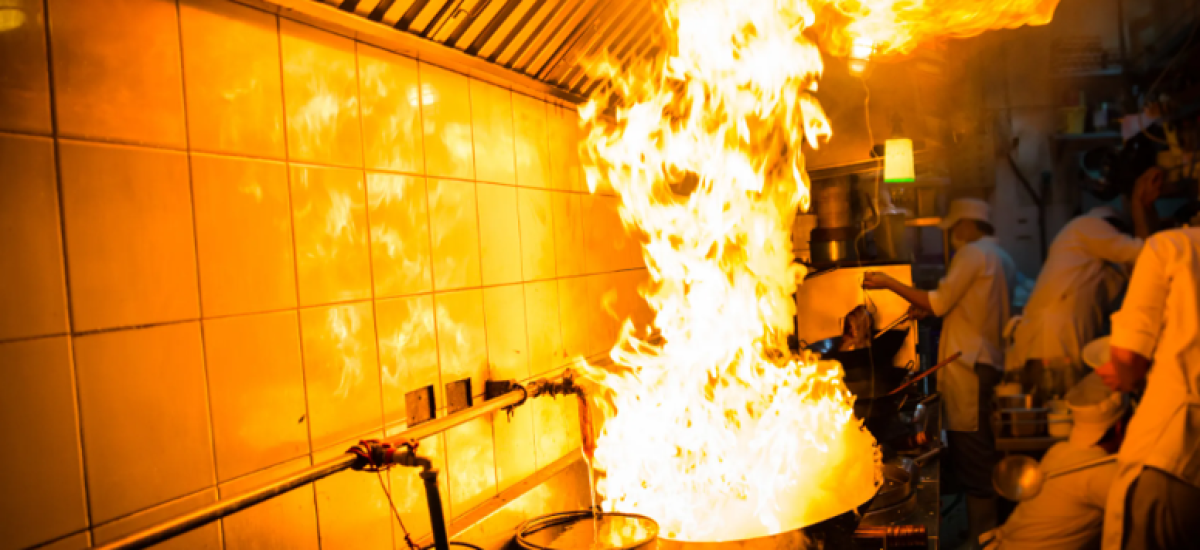
Restaurants and commercial kitchens present a particular fire risk due to the combination of open-flame cooking, high temperatures, hot oils and the continuous accumulation of grease. Kitchen extract hoods and ductwork are particularly important because grease deposits can ignite, allowing a relatively small cooking fire to spread rapidly beyond the kitchen and into other parts of the building.
During cooking, grease-laden vapours and combustible particulates can gradually accumulate within filters, hoods and extract ducts. If exposed to flames or sufficiently high temperatures, these deposits can ignite and provide both additional fuel and a pathway for fire spread. The original Efectis article highlights this mechanism as one of the principal hazards associated with commercial kitchens.
Different Standards, Similar Principles
Internationally, NFPA 96 – Standard for Ventilation Control and Fire Protection of Commercial Cooking Operations is widely used, particularly in the United States and parts of the Middle East. It provides an integrated approach covering kitchen hoods, grease extraction, ductwork, automatic suppression, energy shutdown, inspection and cleaning. European countries generally combine their national fire safety regulations with European standards to cover restaurant fire safety.
An important reference is the EN 16282 series, which addresses ventilation systems and components for commercial kitchens. It includes requirements covering hoods, ventilation ceilings, air ducts, aerosol separators and other components. EN 16282-7:2026 specifically addresses the installation and use of fixed fire-extinguishing systems, including protection against grease fires associated with cooking appliances and extract ventilation systems. The European framework still needs to be considered alongside each country’s national requirements, particularly in relation to building fire safety, compartmentation, inspection and maintenance.
The UK follows a similar approach, combining national legislation and Building Regulations with British and European Standards and recognised industry guidance. In England, the Regulatory Reform (Fire Safety) Order 2005 requires the Responsible Person to assess and manage fire risks, while Approved Document B provides guidance on meeting the fire safety requirements of the Building Regulations.
Lessons from UK Restaurant Fires
Recent UK incidents demonstrate why kitchen extraction systems need to be considered as part of the overall building fire strategy.
In Wembley in 2022, a restaurant fire involving grease deposits spread through the extraction ductwork to the roof, requiring around 70 firefighters and causing significant damage. In Shoreditch in 2023, a fire attributed to grease and cooking deposits within an extraction system destroyed ductwork extending to the roof of a six-storey building. More recently, in Hounslow in 2026, a fire believed to have started when cooking oil ignited in a commercial deep-fat fryer spread through the extraction system, destroying the ductwork and damaging approximately half of the roof.
The lesson is clear: the initial kitchen fire may be relatively small, but the extraction system can provide a pathway for fire to spread to other parts of the building.
Best Practice
Commercial kitchen ventilation systems should be designed to effectively capture grease-laden vapours while providing adequate access for inspection and cleaning. In Europe, the EN 16282 series provides an important technical framework, while UK practice also makes use of DW/172 and TR19 Grease.
Particular attention is required where kitchen extract ducts pass through fire-resisting walls and floors. Where fire-resisting ductwork is required, appropriate test and classification evidence should be provided. In the UK and Europe, this may include testing to EN 1366-1 and classification to EN 13501-3, as applicable.
Fire detection must also account for heat, steam and cooking fumes, while fixed fire suppression should be considered for higher-risk cooking operations. Regular inspection and cleaning are equally important: grease deposits within hoods, filters, ductwork and fans can substantially increase both the likelihood and severity of a fire.
The effective protection requires the combined consideration of extraction, detection, suppression, fire-resisting construction and maintenance rather than relying on an individual fire protection measure.
An Integrated Approach
Whether a project follows NFPA, European or UK requirements, fire ignitionin restaurant ktichen is highly probable and the fundamental principles remain similar: control grease accumulation, prevent fire spread through extraction systems, maintain compartmentation, provide appropriate detection and suppression, and ensure effective inspection and maintenance.
At Efectis, our experience in fire engineering, testing and technical assessment enables us to support clients in evaluating these risks and verifying that commercial kitchen fire protection solutions are appropriately designed and supported by relevant technical evidence.
Understanding the complete fire pathway—from the cooking appliance and extract hood through the ductwork and building compartmentation—is essential to preventing a localised kitchen fire from developing into a major building fire.
For more information please contact: Talal Fateh or Buğra Eren Hakkoymaz