
10/11/2026
Data centers present specific fire safety challenges due to the high density of equipment, the presence of cables, uninterruptible power supply (UPS) systems and, in some cases, lithium-ion batteries, as well as the extremely high requirements for operational availability. Fire protection strategies must therefore ensure very early fire detection, limit fire spread and achieve effective fire suppression, while minimizing damage to equipment and, above all, service interruptions.
Regarding automatic fixed fire suppression systems, their design and assessment can be based on various standards, including EN 12845 for sprinkler systems, EN 14972 for water mist systems (or NFPA 13 and NFPA 750, respectively), as well as EN 15004 / ISO 14520 for gaseous fire suppression systems. For battery energy storage systems (BESS), NFPA 855 and UL 9540A are currently relevant reference standards.
However, compliance with standards alone is not always sufficient to demonstrate the actual performance of an installation. Data center configurations vary considerably, and high-airflow cooling and ventilation systems can significantly influence fire detection, smoke propagation and fire suppression effectiveness.
The involvement of a specialized fire safety laboratory makes it possible to complement the standards-based approach with a fire safety engineering methodology covering four complementary areas: technical expertise, engineering studies, numerical calculations and experimental testing.
Experimental testing provides direct evidence of the performance of fire protection solutions, enables their effectiveness to be assessed under different fire scenarios, and generates experimental data to support and validate numerical models for extrapolation to more complex and/or larger-scale configurations. Testing may range from individual component assessments (sprinkler heads, water mist nozzles) to full-scale fire tests reproducing a single server rack, multiple IT cabinets, or part or all of an IT room.
Measurements may include temperatures, heat fluxes, smoke and gas concentrations, detection and activation times, fire spread to adjacent equipment, fire control or extinguishment times, and the extent of damage to IT equipment.
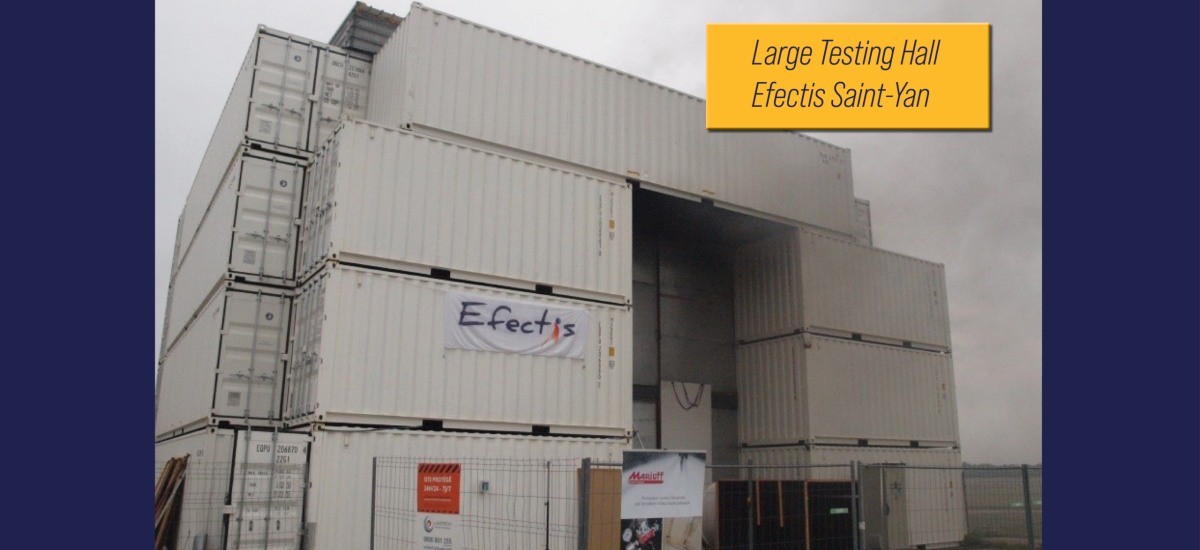
The involvement of a fire safety laboratory therefore enables a performance-based assessment to complement the traditional standards-based compliance approach. This is particularly relevant for innovative data centers, facilities with specific requirements, or configurations that fall outside the direct scope of existing standards. Efectis has already performed last scale tests to demonstrate the previous goals and has a dedicated testing platform to do so.
For more information, please contact: Gildas Auguin