
18/5/2026
More and more vehicles and equipment are being equipped with energy carriers in the form of lithium-containing battery packs. These battery packs are critical because in the event of damage, aging or manufacturing defects, they can cause a thermal runaway with all the associated consequences. The resulting rapid increase in pressure and temperature can lead to explosions or flash fires.
Flammable and toxic reaction products such as solvents, hydrogen, carbon monoxide, and hydrogen fluoride may be released. The uncontrolled temperature rise can only be controlled by external influences (cooling) to prevent the risk of fire or explosion, which is by no means an option in all cases. It is therefore important that a risk analysis includes how both the likelihood of a thermal runaway can be reduced and how the consequences can be mitigated if it does occur.
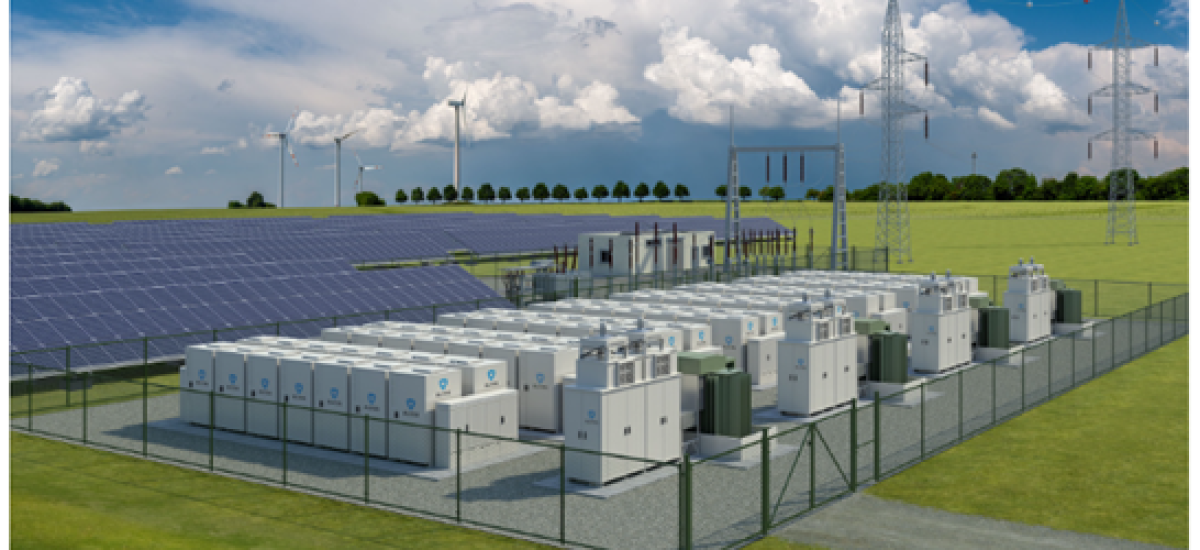
A thermal runaway can occur in a garage for electric cars or trucks, or in a distribution centre where electric bicycles or other equipment with batteries are stored on a large scale. Battery systems used for storing renewable energy from wind turbines and solar parks can also lead to uncontrollable situations and major damage in the event of a thermal runaway.
Legislation and guidelines
For lithium-containing energy carriers, only limited legislation or guidelines have been established in Europe and elsewhere in the world to prevent thermal runaway or limit its consequences. The European battery regulation 2023/1542 is mainly dedicated to the battery to be put in the market, with a follow up by the battery passport. Even art 12 and annex V are requiring safety of Battery Energy Storage System, no rules are given concerning the integration on site. In the Netherlands, under the supervision of the Netherlands Standardisation Institute (NEN), PGS 37-1 has been established within the Hazardous Substances Publication Series (PGS) for active energy storage systems (ESS) and PGS 37-2 for the storage of not active lithium-containing energy carriers. In this respect, the Netherlands is ahead of many other countries. Both guidelines can be found at www.publicatiereeksgevaarlijkestoffen.nl.
Systematics of PGS 37-1 and 37-2
The PGS guidelines 37-1 and 37-2 employ a systematic risk-oriented approach to working with lithium-containing energy carriers. Although these are not yet formally part of the Environmental Activities Decree, these guidelines are already being used in practice for permit applications. This involves an integrated assessment against criteria such as environmental safety, fire fighting/prevention, occupational safety, and disaster management. The methodology was developed by a team of experts from the business community and government bodies and is therefore widely accepted.
The PGS guidelines have the following structure for establishing the measures:
- Scope and scope of application.
- Safe storage of lithium-containing energy carriers
- Basic safety level and risk approach
- Scenarios with objectives
- Guiding principle regarding legislation and regulations
- Objectives in relation to measures and scenarios
- Measures in relation to scenarios
- Equivalent measures
Scope of application of PGS 37-1 and 37-2
PGS 37-1 and 37-2 are primarily intended for commercial situations, which means that, for example, home batteries smaller than 20 kWh do not (yet) fall within the scope. However, the guidelines can be used to gain insight into the risks and measures for this application. The measures are aligned with a classification into so-called ‘Typicals’. PGS 37-1 uses a Typical classification based on housing or location. PGS 37-2 uses a Typical classification depending on the specific product mass in relation to the storage area. The classification also takes into account the condition of the energy carrier: new, refurbished, or discarded for product or material re-use. Within the system, measures can be taken in warehouses with areas up to 10,000 m². Depending on the scale, the number, scope, and consequently the complexity of the measures to be taken increase.
Measures
Each measure is linked to specific goals and scenarios. PGS 37-2, for example, has defined ten cause scenarios and five consequence scenarios. Within the various scenarios, the available measures can be selected per Typical.
This allows for a well-founded choice regarding the effective application of available measures. PGS 37-2 lists, for example, 72 measures relating to the building, prevention and control. Examples of measures include:
- Fire-resistant measures for building structures and penetrations
- Compartmentalization
- Camera systems
- Ventilation systems with CO and H2 detection to extract high concentrations of flammable gases
- Automated extinguishing systems
- Fire extinguishing water collection facilities
- Distance between products and/or goods
- Lightning protection
PGS 37-1 and 37-2 provide conditions for selecting adequate measures for the specific Typical in a well-founded manner. Furthermore, the methodology allows for the formulation of equivalent measures when the proposed solutions prove to be not practical.
Support
Efectis can assist with assessing your situation and selecting the measures to be taken. If you operate as a company outside the Netherlands and there are no local legislation or guidelines available, yet you still wish to take measures to make the storage of products containing lithium-ion batteries safer, the PGS 37-1 and 37-2 methodology is applicable. This methodology provides a solid basis, widely accepted in the Netherlands, for compiling a package of measures. This allows you to consult with the local authority or the fire department to demonstrate safety with a well-founded plan.
For more information, please contact Mark Nuitermans